Folded Horn Speaker Design Software
I have a general question about these two types of subwoofers and any experiences people may have had. Time to add some some thick low end to a couple Mackie 1530s Like most people I'm looking for a system that is as versatile as possible. I want to use them indoors, outdoors, small room, big room, whatever. Are there any disadvantages to a folded horn in a small room? I know that for larger room and outdoor applications they are suppose to be better, but at a lower volume 'up close' gig is this going to be boomy or cause any phase problems?
I've heard people talk about having to be careful about placement with folded horn. Any concerns I should be aware of? For instance, b52 offers both designs at a roughly similar price. Besides 'longer throw' what are the advantages / disadvantages of these systems in comparison? Now, I'm not totally lame! I understand that there are tradeoffs. I just don't know what they are yet!
What are people's votes for the 'most versatile subs'? Of course I'd need to consider value.
I'm looking at systems under 2K. Friv. And I know folded horn are heavier, i'm more concerned with sound characteristics. Actually I need them to be kind of big (tall) so I can set the 1530s on top and get the hi freqs over people's heads.
Everyone can build his own do-it-yourself high performance loudspeaker systems using Eighteen Sound speaker. That's why Eighteen Sound created a range of DiY projects, very easy and effective. 18' HORN LOADED SUBWOOFER MANIFOLDED DOUBLE 18' BAND-PASS SUBWOOFER. Enclosure Design. This horn calculator is developed by the Etheraudio with invaluable assistance of Bulgarian Audiophile Society enthusiasts and some theoretical materials published in the Internet. Our attempt is to offer a quick and easy way to calculate the horn, based not only on theoretical considerations but also on extensive practical experience.
Folded Horn Speaker Design
I DJed an event a few weeks ago that was in a very wide, yet short (that is, not very deep) room. I used CV SL-36Bs for that event and i found it somewhat difficult to get rid of bass frequency echo off of the opposing wall. This really wasn't that evident on the dance floor, but behind the DJ 'booth' area it was very noticable and it made beat matching somewhat difficult.
I had to use my headphones a lot more. The extended throw and the high efficiency of fold horn enclosures is nice but I prefer the sound of a direct radiating sub. That is why I recently sold my SL-36Bs and picked up some EAW FR-250z's (which are AWESOME by the way). Folded Horns: Longer throw but a more focused coverage area High output in a smaller band width Generally heavier and larger They wont go as low unless used in multiples Direct radiating: Shorter throw omnidirectional output Lower sensitivity in a larger band width Lighter and smaller generally Can reach the lower frequencies Although I have not heard all of the folded horns out there, I have found the ones I have heard to be boomy and somewhat muddy or undefined. They do offer tremendous output from 60 to 120 hz but lack the lower frequencies that can really shake things. They also tend to have phasing problems in smaller rooms, but in outdoor situations they do much better than a direct radiating sub. Direct radiating subs have always been my choice.
Folded Horn Speaker Design Software Software
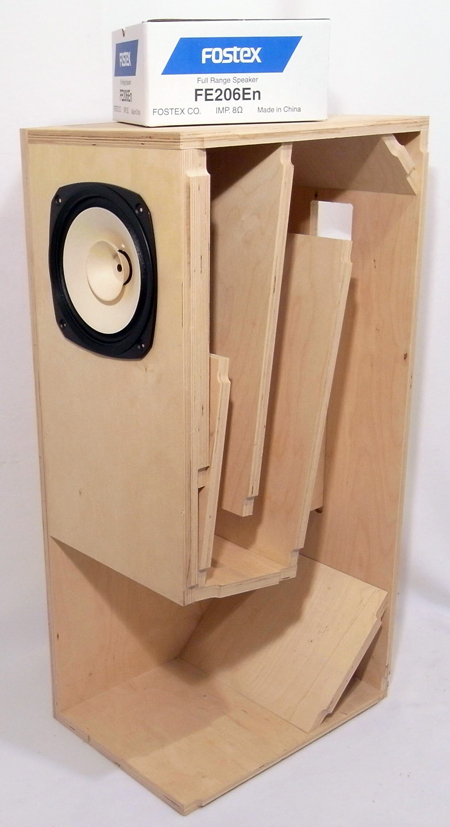
Folded Horn Speaker Plans
A well designed one will be capable of covering just about any room short of a stadium with decent sound. They don't work well in outdoor venues though.